Jyotiṣa: The Science of Time, Karma, and Cosmic Order
A Vedic astrologer’s explanation—grounded in classical texts, observation, and what can be called symbolic science—of how planets affect us, how this knowledge was discovered, and what rules govern it.
1. What does Vedic astrology *really* mean by “planetary effects”?
In Jyotiṣa (Vedic astrology), planets are not believed to physically emit forces that push human behavior (like gravity does). Instead, they are understood as cosmic time-indicators (kāla-tatva).
Planets do not cause events — they signify when karmic patterns ripen.
This is a correlative science, not a causal one.
2. The Core “Science”: Time, Cycles, and Resonance
A. Time as the fundamental force (Kāla)
Vedic philosophy places Time (Kāla) above matter.
- Everything in the universe moves in cycles.
- Planets are the most precise observable clocks.
- Human life also unfolds in cycles (birth, growth, decay, death).
👉 Jyotiṣa maps inner human cycles to outer cosmic cycles.
B. Macrocosm ↔ Microcosm Principle
One of the oldest Vedic laws:
“Yat pinde tat brahmāṇḍe”
As is the individual, so is the universe.
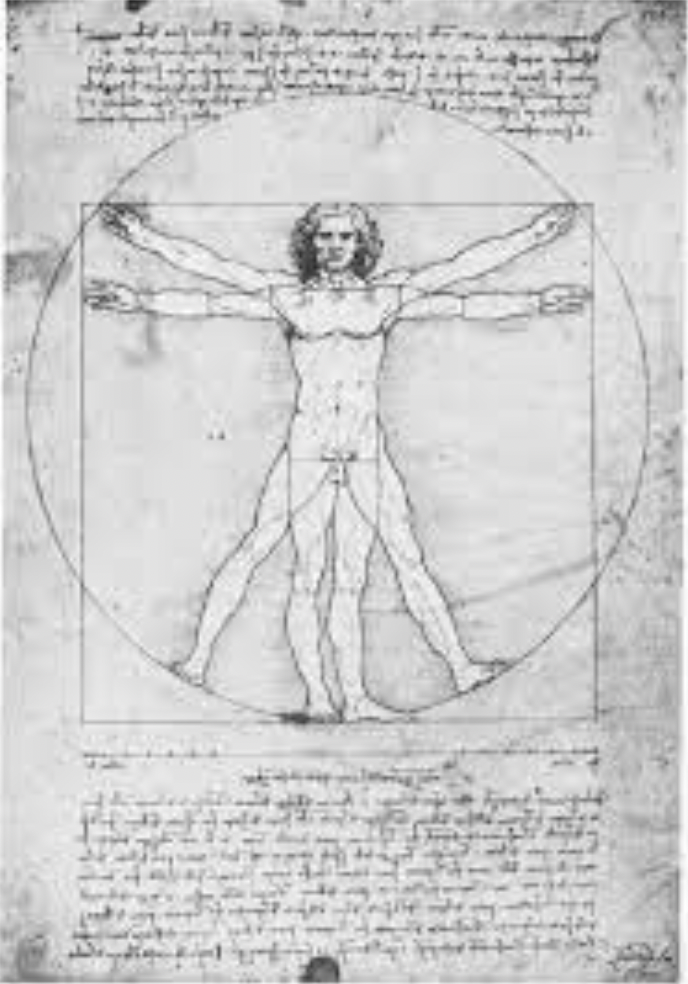


- The same patterns repeat at different scales.
- Planetary motion mirrors psychological, biological, and karmic rhythms.
This is closer to systems theory than superstition.
3. How was this knowledge discovered?
A. Long-term empirical observation (not guesswork)
Ancient Ṛṣis (sages) observed:
- Thousands of births
- Lifelong outcomes
- Planetary positions at birth
- Repeating patterns across generations
📌 Over centuries, correlations became rules.
Example:
- Strong Moon → emotional stability
- Afflicted Saturn → delays, fear, discipline through hardship
This is pattern science, similar to epidemiology, behavioral psychology, or economics (non-deterministic but predictive).
B. Nakshatra-based astronomy (extremely precise)
Vedic astrology is lunar-based, unlike Western astrology.
- 27 Nakshatras (stellar zones)
- Each linked to psychology, motivation, and destiny type.
- The Moon moves ~13° per day, allowing for very fine-grained timing.
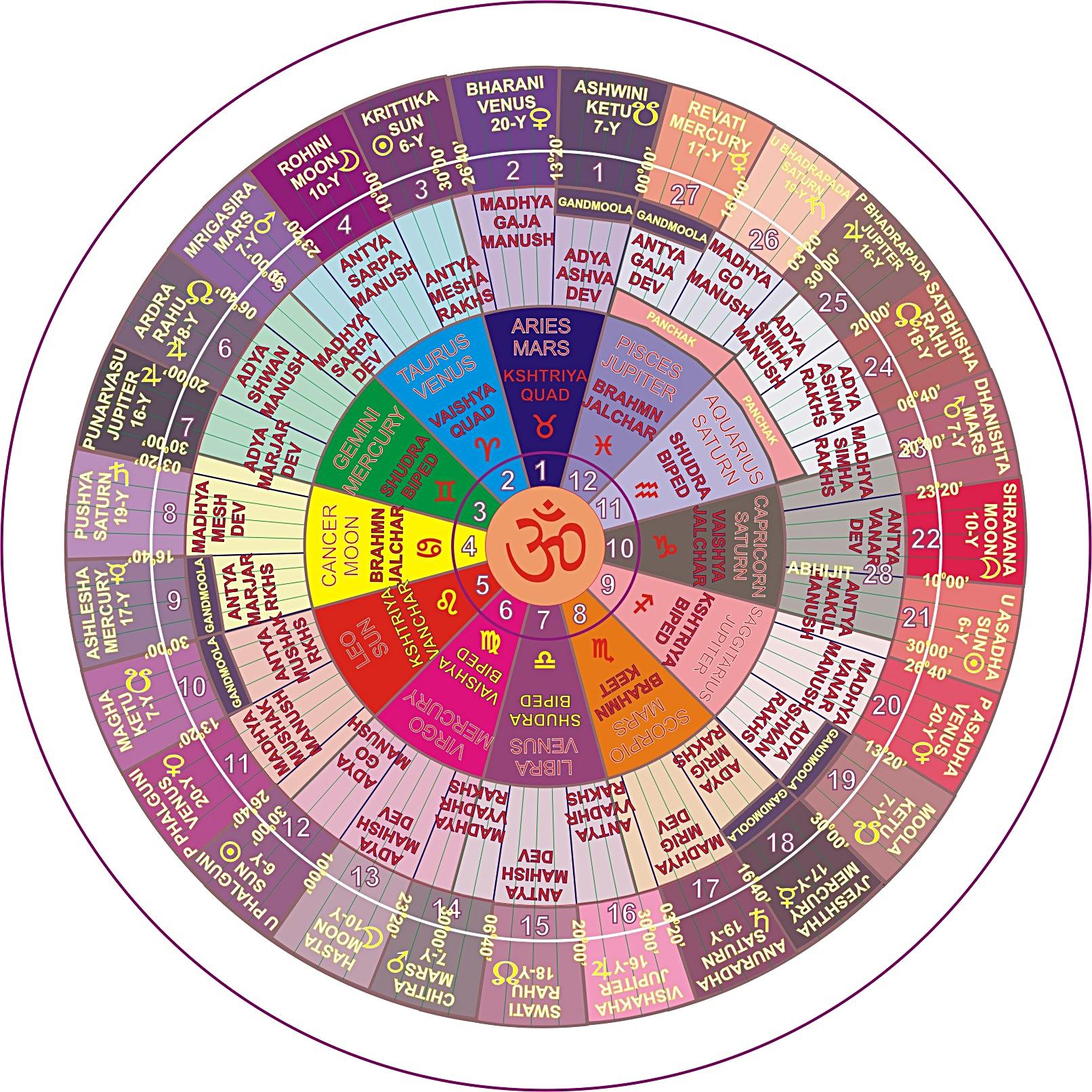

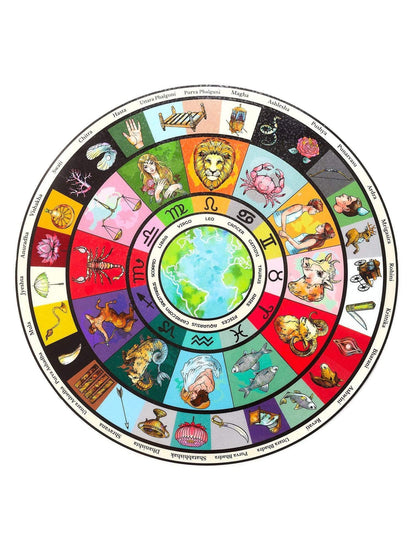
This allowed for daily prediction, Dasha systems (life-period timing), and event forecasting.
4. Why do planets symbolize *specific* things?
Each planet represents a universal function, not a physical force.
| Planet | Represents | Why |
|---|---|---|
| Sun | Soul, ego, authority | Center, life-giver |
| Moon | Mind, emotions | Reflective, fluctuating |
| Mars | Energy, conflict | Heat, aggression |
| Mercury | Intellect, speech | Speed, logic |
| Jupiter | Wisdom, expansion | Growth, generosity |
| Venus | Desire, pleasure | Attraction |
| Saturn | Karma, discipline | Slow, restrictive |
| Rahu | Obsession, innovation | Eclipse, disruption |
| Ketu | Detachment, moksha | Separation |
These were derived from motion speed, visibility, astronomical behavior, and psychological correlation.
5. The Rule System (Very Important)
Vedic astrology is rule-bound, not intuitive guessing.
1. Chart is a snapshot of Time
Birth chart = time-stamp of karmic blueprint. No event happens without Dasha (time period), Transit activation, and Natal promise.
2. Moon > Sun > Ascendant (priority)
Unlike Western astrology: 1. Moon chart (mind & karma), 2. Ascendant (body & environment), 3. Sun (soul & authority). That’s why transits are read from the Moon.
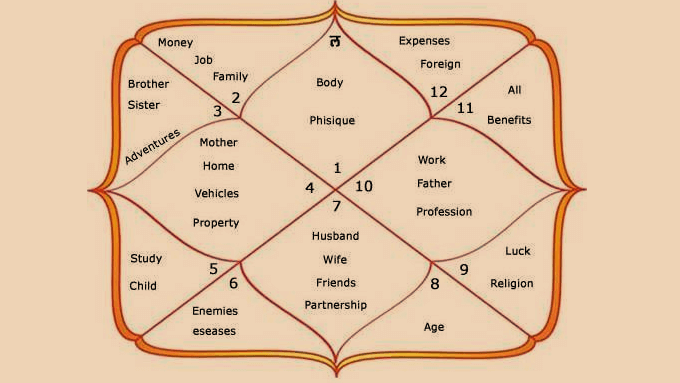
3. Houses are life domains
Each house = a *field of experience*. Planets don’t act alone — they act **through houses**.

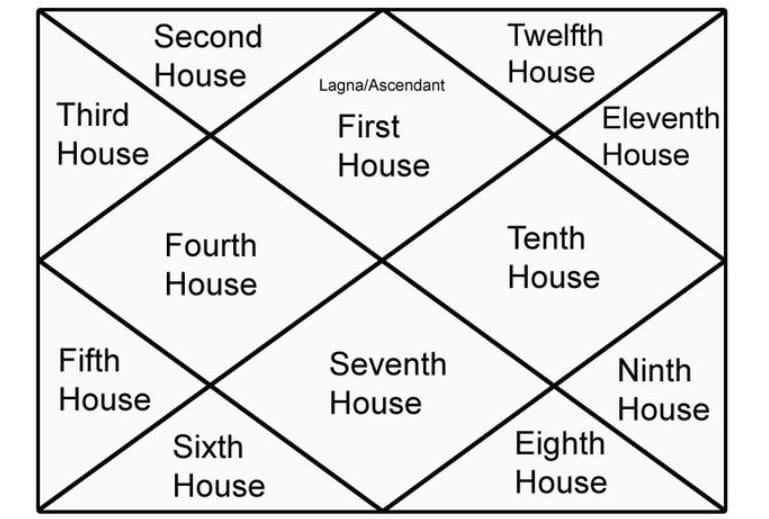
4. Dashas activate karma
Dashas = when a planet is allowed to deliver results. Without Dasha → no event. Transit alone ≠ result. Natal strength modifies outcome. This is why astrology is probabilistic, not fatalistic.
6. Is this “scientific” by modern standards?
Depends on the definition of science.
✔️ Yes, because it is based on observation, is rule-based, predictive, falsifiable in practice, and uses statistical pattern recognition.
❌ No, because it is not laboratory-replicable, deals with consciousness & time, and is symbolic rather than mechanical.
It’s closer to climate modeling, psychology, or economics than physics.
7. The Final Truth (Most Important)
Planets do not control you. They describe the field you are playing in.
Free will exists within karmic boundaries. Astrology tells you:
- What kind of weather you’re born into
- When storms or clear skies arrive
- How to act wisely during them